
Objectives Of The “Know Your Sense Of Humour” Project
The purpose of this project is to begin developing a collection of humorous stories and to present a speech that includes humour.
“Know Your Sense Of Humour” is one of the three compulsory module in the “Engaging Humour” pathway. In this project, the essential task is to include at least one story or anecdote to entertain or bring humour into your presentation.
Prior to Toastmasters International revamping its educational track to the current Pathways education track, the communication track had two advanced communication manuals dealing with humour. They were “The Entertaining Speaker” and “Humorously Speaking”. Every advanced communication manual consisted of 5 prepared speech projects. The projects for these two manuals are as follow:
The Entertaining Speaker
- The Entertaining Speech
- Resources for Entertainment
- Make Them Laugh
- A Dramatic Talk
- Speaking After Dinner
Humorously Speaking
- Warm Up Your Audience
- Leave Them With A Smile
- Make Them Laugh
- Keep Them Laughing
- The Humorous Speaking

Although Project 3 of these two manuals had the same name, there are some subtle differences in the project. In fact, “The Entertaining Speaker” is not explicitly about humour, but more about stories and anecdotes. Nevertheless, it can involve elements of humour.
Know Your Sense Of Humour – Daniel Sun’s Pathway Project
Speaker: Daniel Sun, CC, EH1
Pathway: Engaging Humour
Level 2, Project 1, Know Your Sense Of Humour
Title: Terms Of Address
Date: 12 April 2024
This prepared speech project was presented at Bukit Merah Toastmasters Club.
Inspiration Behind This Project
After my completion of the Competent Communication manual, I embarked on “The Entertaining Speaker” advanced communication manual. I completed 3 projects in that manual. This was one of a few reasons I took up the “Engaging Humour” pathway. However, in the year 2015, Toastmasters International revamped its education track to the current Pathway education track before I could complete my Advanced Communicator Bronze.
Being resistant to the Toastmasters’ change to Pathway education track, I took a hiatus from presenting prepared speeches and turned to building this club website. At the same time, I was observing good speakers and reflecting on how to be a better speaker. After much urging from my club members, I started my first pathway project on 16 March 2023. I took the opportunity to reinvent and improve on my previous prepared speeches. Some scripts were recovered from my computers, some from hardcopy print-outs. Those scripts that are unrecoverable, I rewrite them based on my memory with new elements added.

Not wanting to have my past completed projects from “The Entertaining Speak” manual go to waste, I took one of my three completed prepared speech projects from this manual for this project. However, I could not find my original script despite scouring through my old computers and thumb drives. Not even the print-out of the script. I had to rewrite the whole script. Nevertheless, I stillremember the essence of the script particularly the story of the grandma-like figure at the hawker centre.
The original title of my speech back then in 16 October 2014 (nearly 10 years ago), was “Greetings”. It was the first project in the manual. The name of the project is “The Entertaining Speech”. The objective of that project was to entertain the audience by relating a personal experience.
What spurred me to write this script was because I was annoyed with people who are older than me greeting me as “Uncle”. Ask any lady of any age if they like being greeted as “Auntie”? I am of the opinion that Singaporean are schooled and yet uneducated. Sir, Madam, Mister, Miss, are easily found in anyone’s vocabulary list. They all learned this early in their life when they were in primary one, if not, earlier.
Armed with vivid images of a few incidents that continue to reside and replay in my mind, I wanted to share these stories which are although annoying but potentially humorously entertaining.
Speech Introduction
Good evening uncles and aunties! (Pause) Did I say something wrong?
Let me try again. Let me try once more. (Sung to the tune of Frank Sinatra’s “Let Me Try Again”)
Good evening, Club President, District Officers, Distinguished Toastmasters, fellow toastmasters, ladies and gentlemen!
Were you offended when I addressed you as uncles and aunties? If I had not, I wish that you were. If I had, I’ve made my point.
That is exactly how most Singaporeans address almost everyone. Even he or she is older, much older than you, he or she would still UNAPOLOGETICALLY (emphasize) address you as uncles and aunties.
Let me say that it is not only rude, but it is very uncultured, uneducated, and unrefined in doing so. There is absolutely no excuse for anyone who has attended at least one day of school in primary one to learn how to address another person respectfully. Why do I say that?

The Way To Greet Others Respectfully
The first day of school, how do you learn to address your teachers at the beginning of each lesson?

Good morning sir! Good morning Madam! Good morning Miss so and so! Good morning Mister so and so. ! In Mandarin, it is 先生,女仕,小姐.
Similarly for men who have served National Service, you address officers as sir, not uncle.
Uncles and aunties stemmed directly from the way we addressed people in Hokkien, a dialect most commonly spoken in Singapore.
Ah Jek! Ah Soh! Ah Di! Ah Moi! Lau Eh! (Look at the audience and address individuals)
Very uncouth! Very rude!
In mainland China, men address every woman as 美女,interpreted as pretty woman. Believe me! I have done likewise regardless of their age, and they responded most naturally.
Not a single woman young or old thought that I was teasing them or flirting with them. Back in Singapore, I have always addressed ladies both young and old as Miss or 小姐. In fact, I get especially good service when it is an old lady. You should try that sometime.
Grandma Called Me Uncle
I still can recall vividly a few incidences which I encountered many years ago. Time has not eroded my memories.
On day, I was eating at a hawker centre, seated alone at a round table. There was this little grandma like figure. She stole a few glances at me and was shuffling around near my table like Liang Puo Puo.
Finally, she moved towards my table and stood next to where I was seated. She bent her body perpendicularly, positioning her face directly facing mine and she said, “Uncle! Is there anyone sitting here?”
Time stood still for a few seconds as I paused with my mouth ajar, my hand that was holding the food stopped in mid-air before my mouth. Waves of thoughts flashed across my mind. I was contemplating how should I respond to her. I was wondering whether I should respond furiously or should I ignore her out of anger.
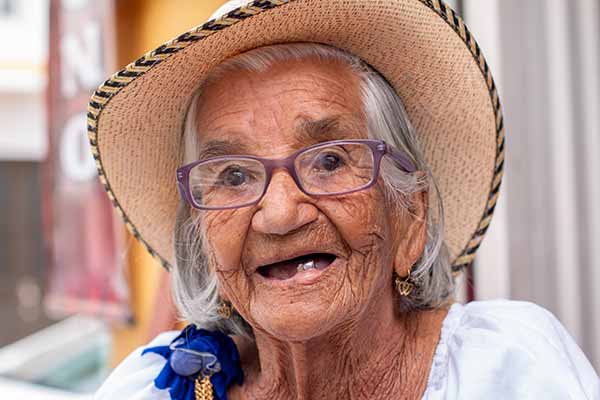
Eventually I decided to respond to her humorously. I replied, “You are older than me and yet you called me uncle?”
Immediately, she smiled and laughingly replied, “Oh! 大哥!大哥!”
Now, from this grandma’s uncle, I have become her elder brother.
Fortunately, she did not used Korean, “Oppa!” In Korean, that could mean either brother or darling.
Ladies and gentlemen, a simple sir, mister or 先生 will do.
Little Brother – A Taboo Term
There is yet another taboo term that should not be used in addressing people. This happened during my junior college days. I was in JC2, which meant that I was 17 to 18 years old. I should be around the same height as I am now because most people do not grow any taller after 18 years old. If you think they still do, I wish so too.
As you probably already know, junior college uniforms in Singapore are unique. The top and bottom are both of the same colour. Any Singaporeans will know that you are a junior college student if you are wearing a junior college uniform.

I was wearing my junior college uniform walking towards my school a short distance away. A car pulled up slowly next to me and stopped. The driver called out to me in a high pitch voice, “小弟弟!“, which meant little brother.
Now, you do not called anyone 小弟弟 or little brother. Whether you say it in Chinese or in English, they both have the same meaning. It could mean little boy and more often than not, they refer to a certain human organ. I shall not elaborate further. I know that all of you here are very knowledgeable.
He was asking for direction. I felt like telling him, why don’t you ask your little brother instead.
It was certainly impolite to address a 17 to 18 year old young adult as little brother. This little brother would be serving his national service in a few months time.
It would have been alright to address someone younger as 小弟, if you know that person well enough. It is a little affectionate or playful if you know that he does not mind that. It is the equivalent of junior, sonny boy, or boy in English.
However, …. Little brother … (wag finger)
Speech Conclusion
In conclusion, if you have read Chinese books widely enough, you address a much older person as 前辈. A man who is slightly older as 大哥 or 兄台. A man who is younger as … 兄弟, not little brother.
If you want to position yourself at a similar status with someone else, a simple brother or sister would do, instead of uncle or auntie.
Back to you, brother!




0 Comments