

Table of Contents
Objectives Of The “Introduction To Toastmasters Mentoring” Project
The purpose of this speech is for the member to share some aspect of a previous experience as a protégé and to clearly define how Toastmasters envisions mentorship. “Introduction To Toastmasters Mentoring” is a project that is only found in Pathway, and not in any previous Toastmasters educational track. It is a compulsory projects in Pathway’s Level 2 projects.
Introduction To Toastmasters Mentoring – Daniel Sun’s Pathway Project
Speaker: Daniel Sun, CC, EH1
Pathway: Engaging Humour
Level 2, Project 2: Introduction To Toastmasters Mentoring
Title: Who Are My Mentors?
Date: 25 April 2024

The prepared speech project was delivered at Telok Blangah Toastmasters Club.
Inspiration Behind This Project
I have heard a couple of prepared speeches of this project by other toastmasters. Yet, I have not really come across one that sounded positive to me, of which the mentors are doing the right thing. These toastmasters either have their “mentors” assigned to them or they simply assumed that the friends who have recruited them were their “mentors”. These “mentors” were simply going through the motion of “coaching” a few prepared speech projects and that was it.

I have written a blog article, “3 Kinds of Mentorship“, published on16 June 2020. It detailed the different kinds of mentors and the pitfalls of the first 2 kinds: “assigned mentors” and “assumed mentors”. In this project, I have used these 3 kinds of mentorship as an outline for my speech and relate how I, on my own, learned by observation from the examples of other toastmasters who are good speakers.
Nevertheless, this is only in the area of public speaking. What I find greatly lacking in Toastmasters is mentoring in the area of leadership. I have seen new members recruited into clubs and were quickly promoted to be executive committee members, because the older members have been looking forward to relinquishing themselves from the burden of being executive committee members. The new executive committee members who are freshly recruited into Toastmasters for less than a year, have no network, no experience, no knowledge. Instead of being handheld and guided closely, they were left in the dark to grope about by themselves.
Otherwise, they were simply asked to refer to the Toastmasters leadership manual. It is no surprise why these people left as soon as they joined Toastmasters.
Speech Introduction
(Re-enact the opening scene of the 1970’s TV Series, “Kung Fu”. Stretch out an arm with the palm opened facing upwards.)
“Snatch the pebble from my hand.”
(Close the palm.)
“When you snatch the pebble from my hand, it would be time for you to leave.”
(Stretch out both arm, touch the side of the lectern with my two forearms and pretend to lift the lectern.)
Good evening Club President, Distinguished Toastmasters, fellow toastmasters, ladies and gentlemen.
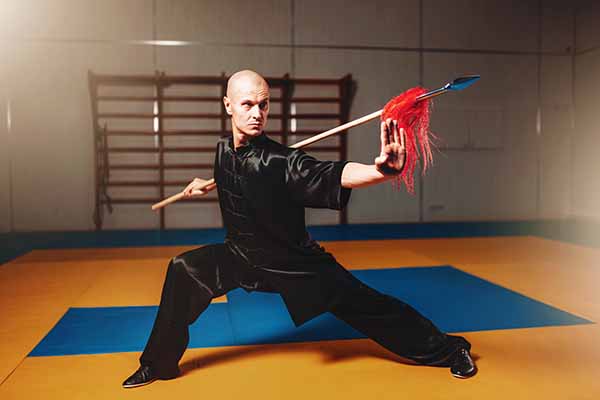
How many of you could tell which TV programme was I re-enacting? It was the 1970’s TV Series, David Carradine’s “Kung Fu”.
What Is A Mentor?
Ladies and gentlemen, a mentor is somewhat like a kung fu master. Not only does he impart skills to you, teaches you philosophy, he also instructs you on how to live your life.
I joined Toastmasters 12 years ago via the SpeechCraft programme. From my memory, I vaguely recalled I received a form. Therein was a question asking me, “Do you need (or was it want) to have a mentor?” Not knowing what to expect and what could possibly happen, I chose to reply, “no”.
Do I have any mentors? The answer is both yes and no.
The way I look at mentorship, there are three kinds of mentors:
- Assigned Mentors
- Assumed Mentors
- Admired Mentors
Assigned Mentor
An assigned mentor is a mentor assigned to you by an organisation. If I had requested for a mentor, could you imagine who was it from my club, that could have been my mentor? You are familiar with my club members. My club has very limited human resource. In the case of assigned mentor, I did not and do not have one.

I am fortunate that I did not have an assigned mentor that asked me to do crazy, unpractical things like some unfortunate souls did. What far fetched ideas some crazy people could possibly have? The thirty-six chambers of Toastmasters? Wake up before dawn and project my voice out loud while the sun rises?
A good mentor is hard to come by.
So do I have a mentor? No. An assigned mentor, I do not have one, and I am glad.
Assumed Mentor
What is an assumed mentor?
Someone who assumes that he is your mentor. Whether he qualifies or not, that is beside the point. Most importantly, he believes that he qualifies.
In the case of assumed mentorship, it can be disastrous. The word assume is spelt A, S, S, U, M, E. “Assume” makes an ass out of you and me.
Several years back, I joined a business network, not a multi-level marketing company. The person who recruited me, naturally assumed that he was my mentor. He told me, “From now on, I will be telling you the areas you need to be corrected and where you have to improve on.”
He told me, “The most important thing is to make money.” However, he does not hold a job and watch Netflix all day long at home while his wife worked hard for the money.

He is an atheist and yet he lectured me on my views on religion.
He wears pink and he told me that I should not dress formally like I used to when I was a teacher. I should not wear black. I should not wear Adidas apparels because they are meant only for young people and sportsmen.
He told me what is the minimum number of times that I should bathe each day because I stink. According to his logic, I should then take a bath after each meal because I perspire whenever I eat. Whenever I walk from one point to another, I should also take a bath because I perspire too whenever I walk.
I believe I have made my point … clear!
Admired Mentor
What is an admired mentor?
He is someone you admire. He is not a mentor assigned to you. You may not even know him personally. It is somewhat like you know hm but he does not know you. If he is worthy of your admiration, most probably he is someone who is well established and assured of his own self-worth. He need not assume to be your mentor and lord over you, without anyone asking him to, especially you.

In Toastmasters, I do not have any assigned mentors, nor assumed mentors … fortunately. How have I learned to speak? How have I grown as a toastmaster? There are many good toastmasters in different clubs. You can find them in area contests, division contests, workshops and trainings.
I watch them. I observe them. I reflect. I question myself, “What was it about them that impressed and impacted me?” I internalise and assimilate what these toastmasters do. I see myself doing what they are doing.
With my own improvisation, I can possibly do it better than them. I have something better and stronger than them, that they do not have, and so do you. They might not know me but I could still approach them during big gatherings and seek their advice, and so could you.
Do not say to yourself, I do not have good speakers in my club. Go visit other clubs, especially those clubs with good speakers. One of those clubs is Telok Blangah Toastmasters Club. (This project was delivered at Telok Blangah Toastmasters Club) You have Wekie Tay. Attend trainings. Be an audience at speech contests.
There are people out there with something good that you can learn from. If they do not have anything good, ask yourself, what are those bad things that they are doing, and tell yourself not to do them.
Conclusion
I may not have any mentors, and yet I have many mentors.
If you want to be a mentor, remember this. What I do not have, I cannot give. What is not a part of me, I cannot impart.
Back to you, Toastmaster.




0 Comments