
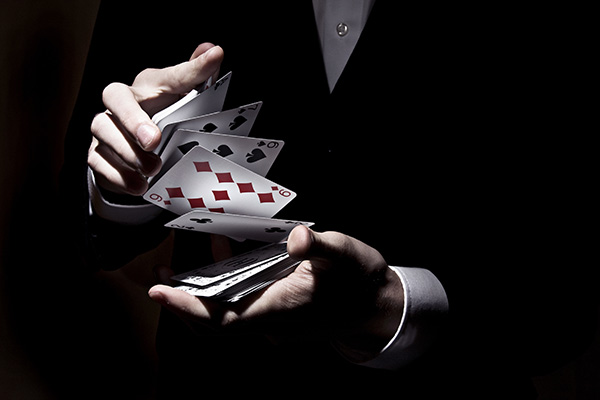
Table of Contents
Objectives Of The “Introduction To Vocal Variety And Body Language” Project
The purpose of this project is to practice using vocal variety or body language to enhance a speech.
“Body Language” and “Vocal Variety” were 2 separate projects out of the 10 projects in the old Toastmasters Competent Communication manual. “Body Language” was Project 5 and “Vocal Variety” was Project 6. When Toastmasters International revamped the Toastmasters’ communication track into the current Pathway system,
“Body Language” became a level 2/level 3 project known as “Effective Body Language” whereas “Vocal Variety” became a level 3 project known as “Understanding Vocal Variety”. After the implementation of the Pathway system, Toastmasters International realised that body language and vocal variety are two essential skills that make up a good presentation, they were soon re-introduced as a level 1 project, “Introduction to Vocal Variety and Body Language”.
Just to name a few, body language consists of:
- body movements;
- gestures;
- postures;
- facial expressions,
- any form of acting/drama that enhance the effectiveness of your speech delivery..

Vocal variety is the control of your voice. Some of these are:
- variation of your pitch;
- variation of your volume (amplitude);
- variation of your rhythm;
- use of pauses during your speech.
Body language and vocal variety are the dynamic duo in speech delivery which add colours, vivacity and drama that turns an otherwise monotonous, boring speech into one that is engaging and riveting.
It is a good thing that Toastmasters International decided to bring forward these two essential skills into the level 1 projects as any toastmaster who wants to master his/her public speaking skills must understand, practice and incorporate body language and vocal variety into their speech delivery as soon as possible.
Introduction To Vocal Variety And Body Language – Daniel Sun’s Pathway Project
Speaker: Daniel Sun, CC
Pathway: Engaging Humour
Level 1, Project 3, Introduction To Vocal Variety And Body Language
Title: Magician Or Conman?
Date: 19 October 2023
Inspiration Behind This Project
In this project, I have incorporated the use of magic tricks and gimmicks into my prepared speech projects. Nevertheless, this is not the first time that I have done this. I did this before years ago when I was presenting my projects from the Competent Communication manual. Although talking about magic and performing magic create ample opportunities for the use of body language, it was not my intention to substitute that with the usage of any other forms of body language in general during my speech delivery.

That might have been my intention during my early toastmasters years but certainly not for the present as I have grown. Besides performing some simple magic tricks during my speech delivery, I also incorporated many other forms of body language like I always did for all my speeches where I did not incorporate the use of magic tricks.
I have many draft scripts for speeches on many different topics and magic is one of them. For a long time, I have always wanted to talk about magicians and conmen.
The difference between magicians and conmen lies mainly on their intentions. Looking back, I would have chosen not to get too involved with many so-called magicians who were more interested in cheating me particularly of my money than actually teaching me magic tricks.
I wanted very much to share some of my experience I had with conmen, which can be educational and beneficial to everyone. There is so much to be shared but a 7-minute speech is simply too little time for me to elaborate in detail. I intend to have a follow-up speech that is fully dedicated on the use of Verbal Manipulation called Cold Reading.
Speech Introduction
“I am David Copperfield. Today I am determined to walk through the Great Wall of China.”
Club President, Distinguished Toastmasters, fellow toastmasters, ladies, and gentlemen. I am … NOT David Copperfield. My name is Daniel Sun.
Is David Copperfield a wizard, a sorcerer, or … just a showman whom we called, a magician?
Perception of David Copperfield’s “Power”
A few decades ago, I was serving in a children’s church, or some called it a Sunday School. One Sunday, as one of the helpers came forward, the children began exclaiming excitedly (jump and clap my hands joyously), “Magic show, is it? David Copperfield!” (Imitate children’s excited tone.)
In respond to that remark, that teacher solemnly spoke, “No, this is not a magic show and I suggest that you do not watch David Copperfield. I do not know where he got his power from to walk through the Great Wall of China.” (Put on a solemn look and a serious tone.)

Ladies and gentlemen, let me tell you solemnly today that anyone who earn his income providing entertainment as a magician, is not a wizard nor a sorcerer. Why? If he were a sorcerer or a wizard, he would have turned anything into gold with his Midas touch (try to touch someone on the forehead with my index finger). He can then enjoy his time doing whatever he likes, instead of wasting his time trying to entertain you, especially unappreciative and sceptical audience.
4 Principles of Magic
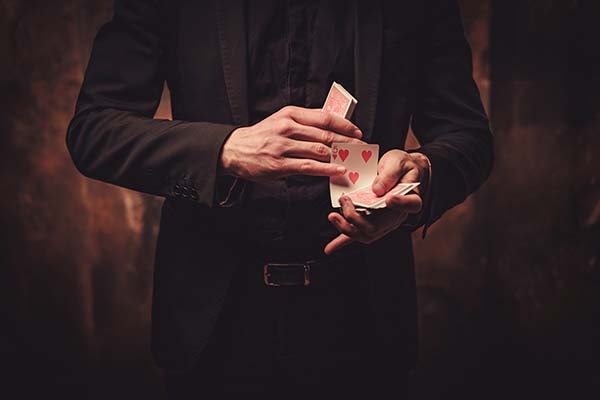
Magic tricks are merely deceptions, and they operate on 4 main principles (put up my 4 fingers):
· Usage of props and gimmicks,
· Misdirection,
· Sleight of hands, and
· Verbal manipulation
I will elaborate on each principle shortly.
There lies a very thin line between a magician and a conman. (Draw a horizontal thin line in the air with my thumb and index pinch together.) Both use these four principles to achieve their goals. A magician uses them to entertain his audience whereas a conman uses them to deceive and take advantage of his targets. Whether you are a magician or a conman, it lies within your motives. (Make a heart shape my thumbs and index fingers and place them on my heart.)
Props and Gimmicks
Number one – props and gimmicks. (Show my thumb as I say, “Number One”, then break off the thumb-tip gimmick off from my thumb.) Props and gimmicks are objects specially designed to function in a special way, for a specific purpose. Big objects used in a stage show are called props. Small objects that can be carried around in a pocket, are called gimmicks. (Put the thumb-tip gimmick into my pocket)
Say for example, this wallet. (Take out my wallet.)
It looks like an ordinary wallet. I have credit cards in it and even some money. (Show the US dollars and put them back in the wallet.)
Oh! They are US dollars. (Shut the wallet.)
Do you know that very soon, the US dollars will become worthless? They will go up in flames.
(Reopen the wallet and set the wallet on fire. Shut the wallet and extinguish the fire. Reopen the wallet and show the wallet and its content intact)
This is just an ordinary wallet, or is it really just an ordinary wallet? (Throw the wallet onto the table.)
Now, that was just a magic trick using a gimmick. However, if I were a conman, pretending to have supernatural power, I would use chemicals such as phosphorous to shoot out flames of fire like what you have seen in Chinese movies.
Misdirection
Number two – misdirection. Misdirection is any form of attempt to distract you, turning your attention away towards something else except what I am doing. It can be a use of words, hand gesture, body language, or just about anything.
(Turn to face the side and look in astonishment. Point the finger towards something in the air and exclaim.)

“Look! It’s a bird! It’s a plane! It’s superman!”
No! That was not superman. That was merely a misdirection. Pickpockets often use misdirection to steal valuable possessions like wallets from their targets. I need not elaborate on that because I believe that you have seen them in movies. Hopefully, you have not been a victim yourself.
Sleight of Hands
Number three – sleight of hands. (Pick up the deck of cards from the table and begin handling the playing cards and riffle them.) Sleight of hands are skilful hand movements used to conceal, deceive, and confuse the audience from what the hands are actually doing.
Let me demonstrate a scene from the God of Gambler Part 3, where Andy Lau, magically change a card.
(Prepare my playing cards, bluetooth speaker and iPhone. Sit down at the table. Show the Ace of Spade and put the card down on the table with its value facing upwards.)
Maestro, music!
Oh! There is no Maestro here. It looks like I will have to provide my own music.
(Play the background music from the scene of God of Gambler’s movie and re-enact the scene in God of Gambler Part 3)
That was done by a sleight of hand, perhaps with some misdirection added in.
I could consider my act as a mini magic show meant for entertainment. However, if we were gambling, then I would have been a conman.
Verbal Manipulation
Number four – verbal manipulation. Verbal manipulation is a play of words. It can be done in so many ways depending on the situation, depending on the context. Generally, what the magician or the conman says, is VAGUE! It can mean almost anything, or it can mean absolutely nothing. They are totally dependent on your interpretation, or they could be twisted and turned to become his interpretation. Whichever the interpretation, it is meant to serve his purpose.
I was introduced to a numerologist a year or two ago. Amidst all the things that he was telling me, he suddenly exclaimed, “哗!你有桃花运!”, which meant, “You have good luck with women.” I do not have the exact words in English for that because it could be interpreted in many ways depending on the context.
Most of you are Chinese and you know what that means. To that I replied, “Are you sure? I don’t even have a single girlfriend all my life.”
He then replied, “Oh! You missed it! She ran away already. 跑掉了!However, eight or nine years down the road, you will have another chance.” Talking about relationships, even an eighteen-year-old teenager would be impatient if you were to ask him to wait for eight or nine years. What about a man of my age?
Ladies and gentlemen, eight or nine years is a time enough for him to con me for whatever he wanted to if I were to fall for his deception. He would not be around by then. Even so, such conman always explains things away with all kinds of excuses.
Hmmm … doesn’t that sound like many motivational speakers? It is because you did not follow those steps I gave you to its precision, blah … blah … blah … la-di-dah, la-di-dah, la-di-dah, etc., etc., etc. By the way, walking on fire is a magic trick too. Hmmm … which motivational speaker has been making his students do that?
Speech Conclusion
Fellow toastmasters, David Copperfield is a magician, not a conman. He is a showman, who entertains you. In return, he receives a good sum of money for providing that entertainment. As to how he walked through the Great Wall of China, we can discuss that after the meeting.
My name is Daniel Sun. I am not a magician nor a conman. I am simply, a toastmaster.
Back to you, Toastmaster of the Evening.




0 Comments